
Chapter TEN - THEATRE & CONCERTS
This page contains examples for the book Immersive Spatial Sound.
Chapter 1 - How We Create A 3D Soundscape Of The World | Chapter 2 - Binaural Sound | Chapter 3 - Using Binaural Sound In Audio Drama | Chapter 4 - Using Binaural Sound In Theatre | Chapter 5 - Ambisonics, Dynamic Binaural Sound & 360° Films | Chapter 6 - VR, AR, MR & Game Audio Technology | Chapter 7 - Loudspeaker Spatialisation | Chapter 8 - Cinema, Home Cinema & The Rise Of Dolby Atmos | Chapter 9 - Spatial Audio For Music Production | Chapter 10 - Theatre & Concerts
THEATRE SPEAKER PLACEMENT
The ideal speaker positions for imaging sound to the performance area are right in the middle of the performance area. However, this can be visually intrusive, and the actors may become cross about sharing their acting space with large speaker stacks.
We often have to move the speakers to the side and above the proscenium. These positions are less than ideal, and we frequently need to install small speakers along the front edge of the stage—front fills—since these rows are now out of shot of the main speaker system.
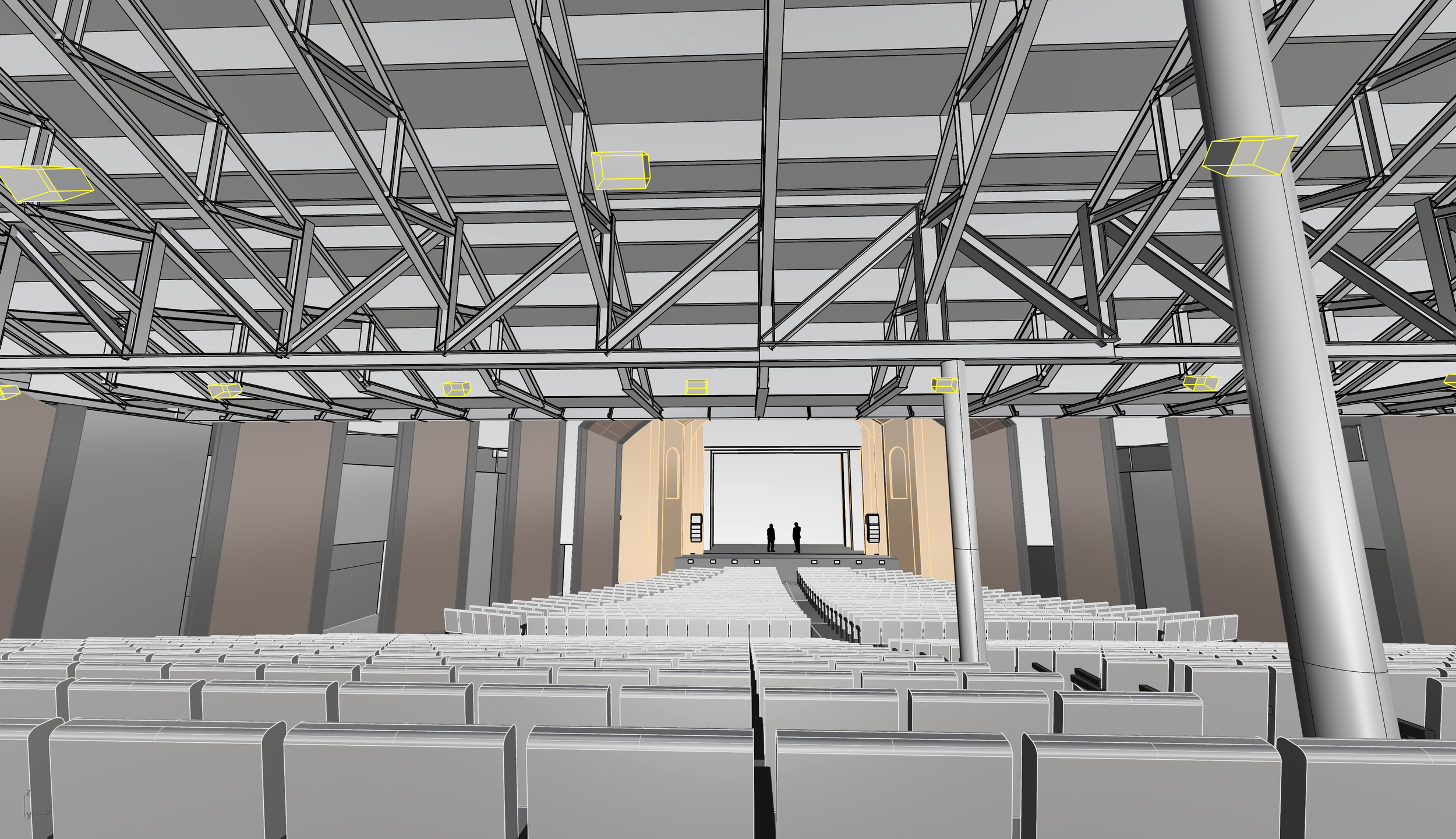
Two traditional “delay lines” consisting of a row of speakers (highlighted in yellow) along the ceiling: one near the front and another closer to us. These speakers are delayed relative to the vocal clusters, which are out of shot due to the balcony above. These are typically in mono in a non-spatialised system. Each audience member need only hear sound from one delay speaker.
SPATIALISED SYSTEM SPEAKER PLACEMENT
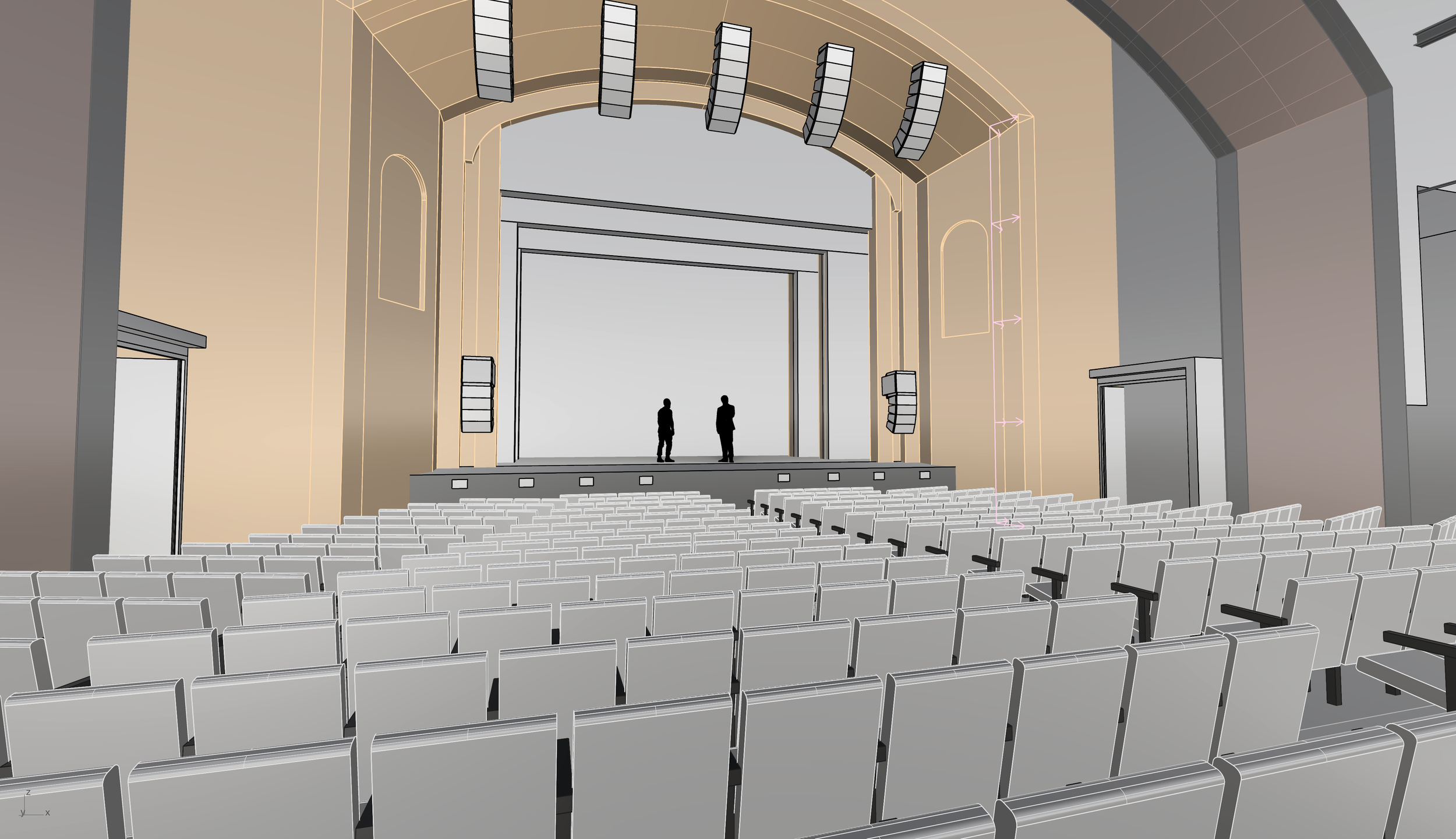
A 5-hang vocal cluster offers better spatialisation but can be more challenging to rig, particularly in certain venues., for example, a venue with a curved ceiling like this.
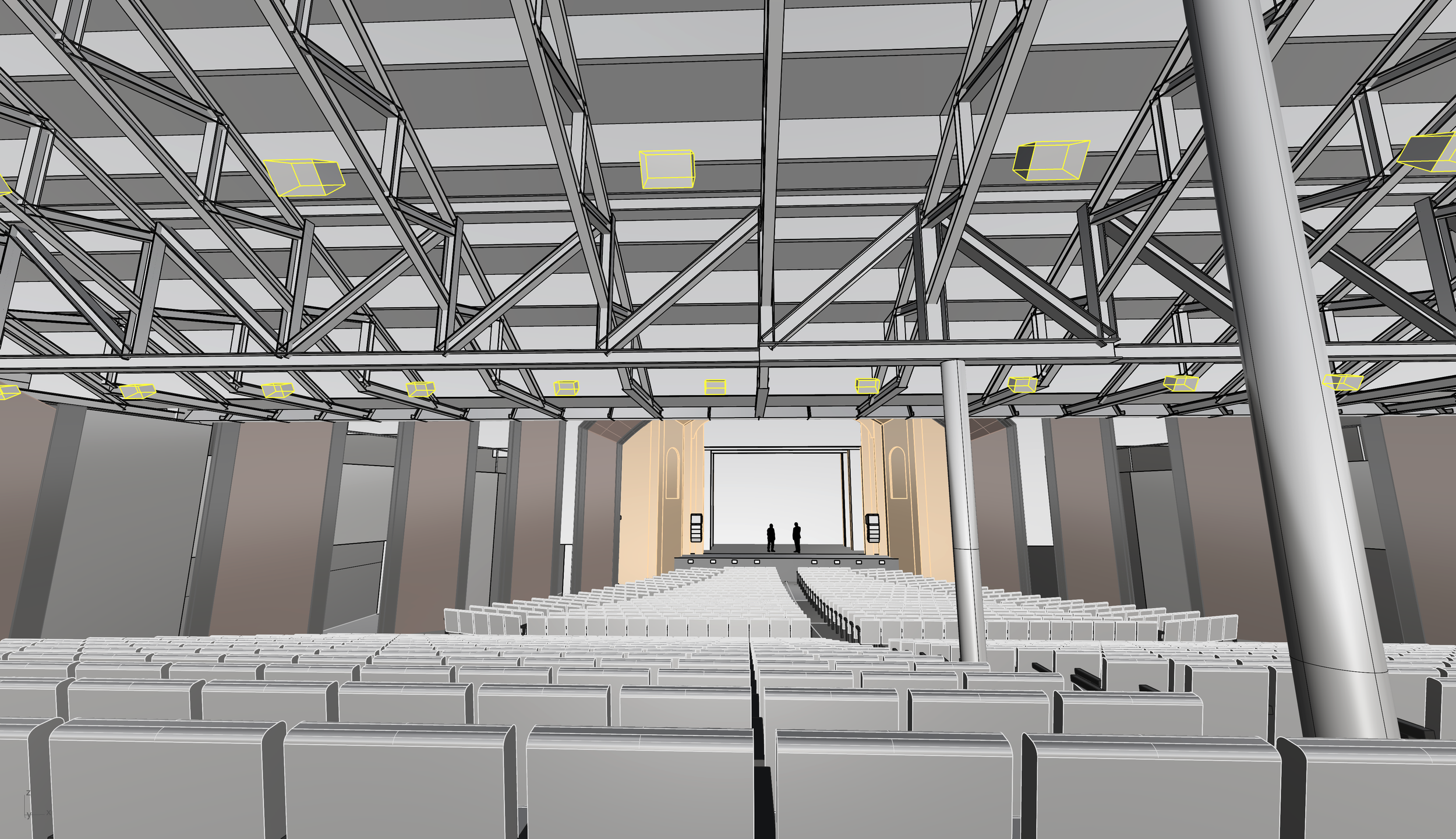
A higher density delay line employs more delay speakers placed closer together. Each audience member perceives sound from at least two speakers, allowing them to identify spatial cues from the different sources.
Modelling speaker coverage and spatialisation
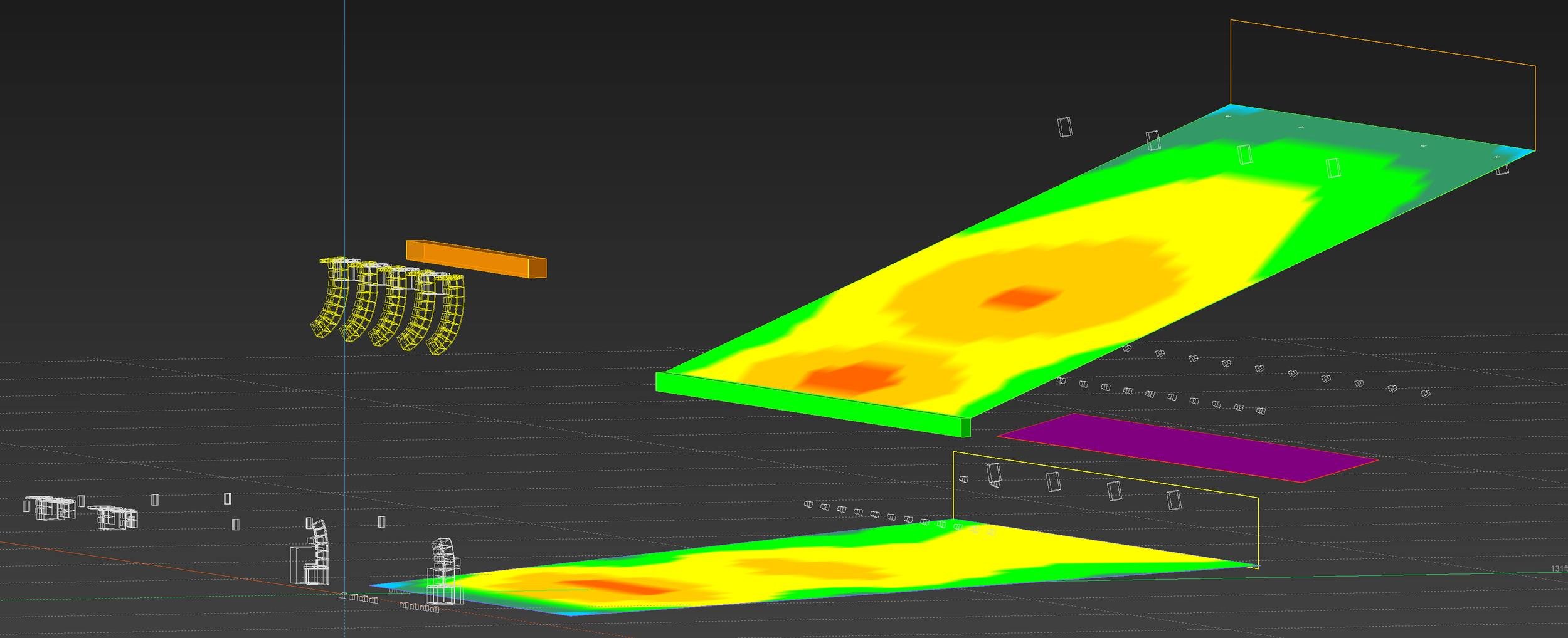
ArrayCalc direct sound loudness predictions for a 2kHz sound routed to all five vocal clusters.
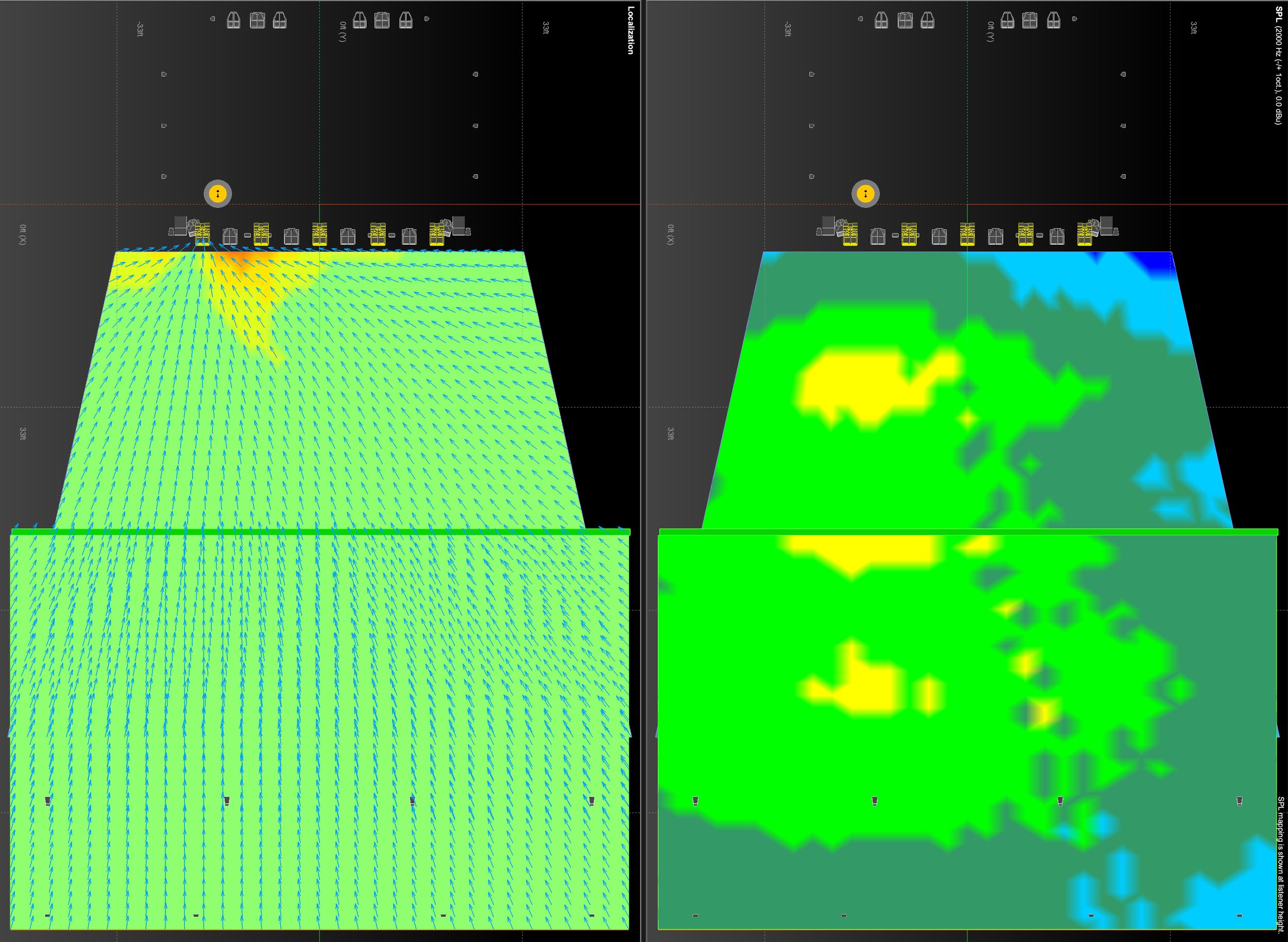
ArrayCalc can also predict the direction in which people will perceive the object relative to various positions in the auditorium.
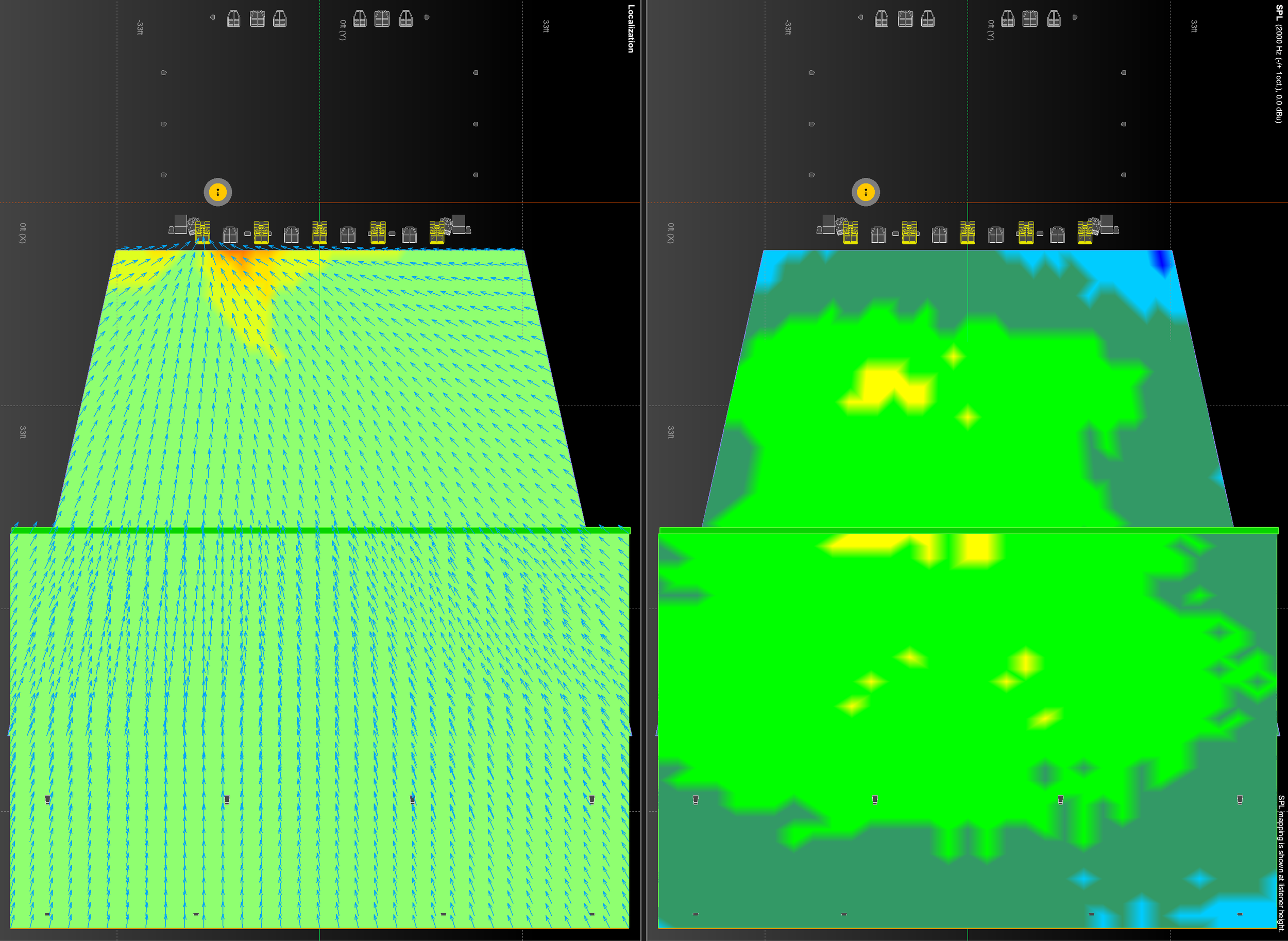
In this image, the object has a Spread of 0.75, rather than 0, which creates more even coverage across the auditorium, though at some expense to the spatialisation.
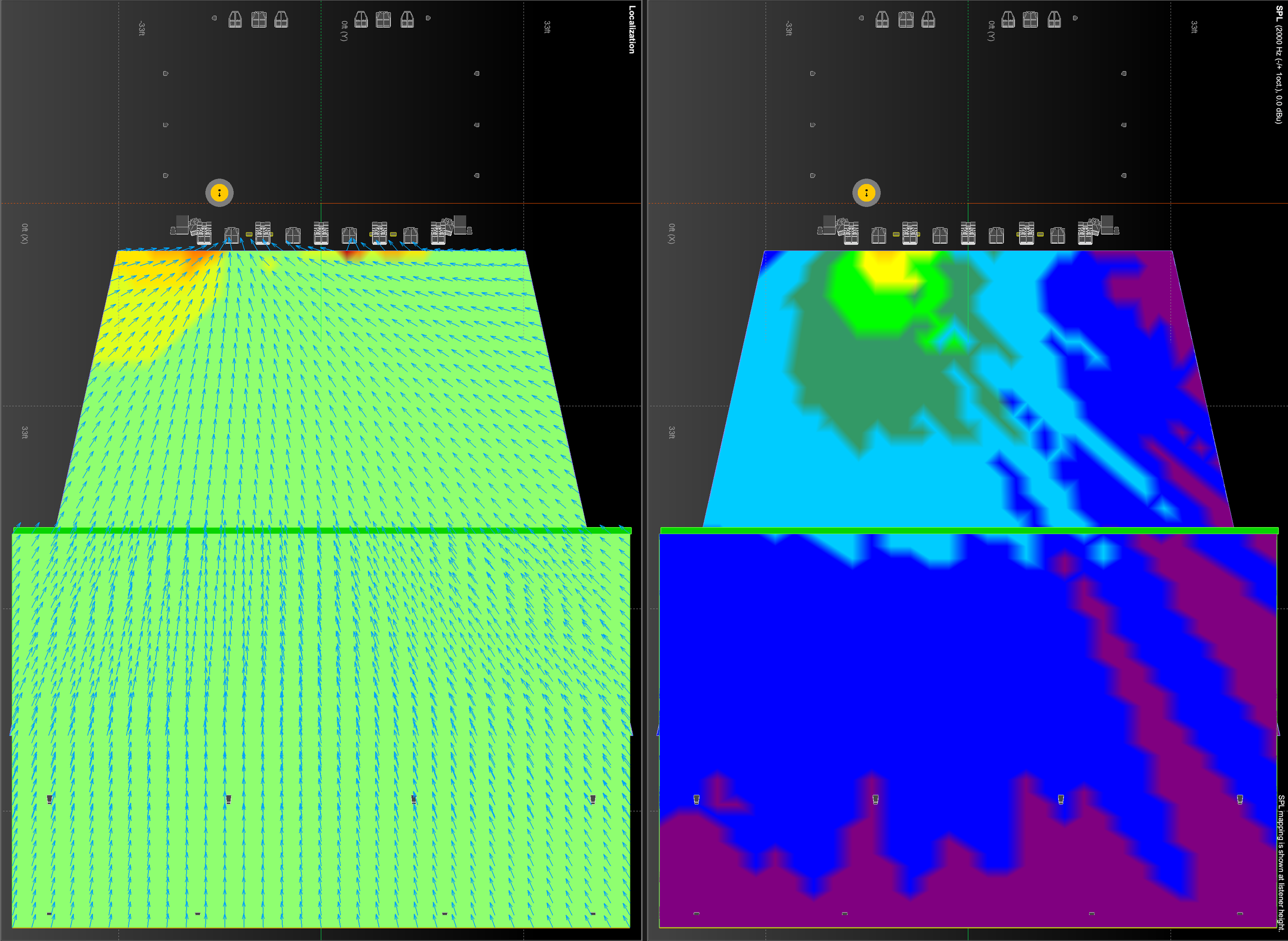
An object with a Spread of 0 routed to a Front Fill.
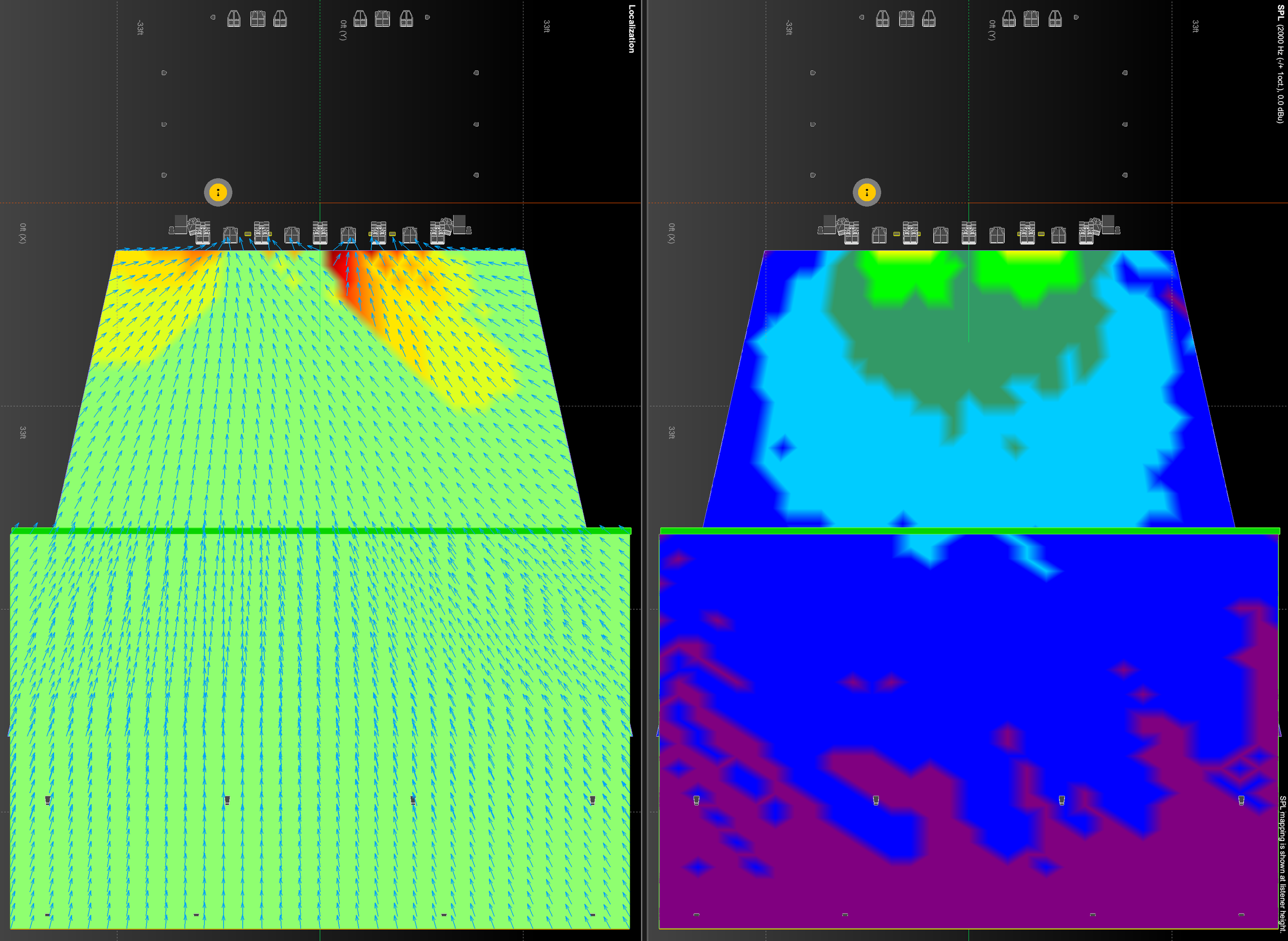
An object with a Spread of 0.75 routed to a Front Fill. On the lower part of the image, the area in red shows where the perceived direction least matches the actual direction.